
How to Fill Slow Days at Your Salon
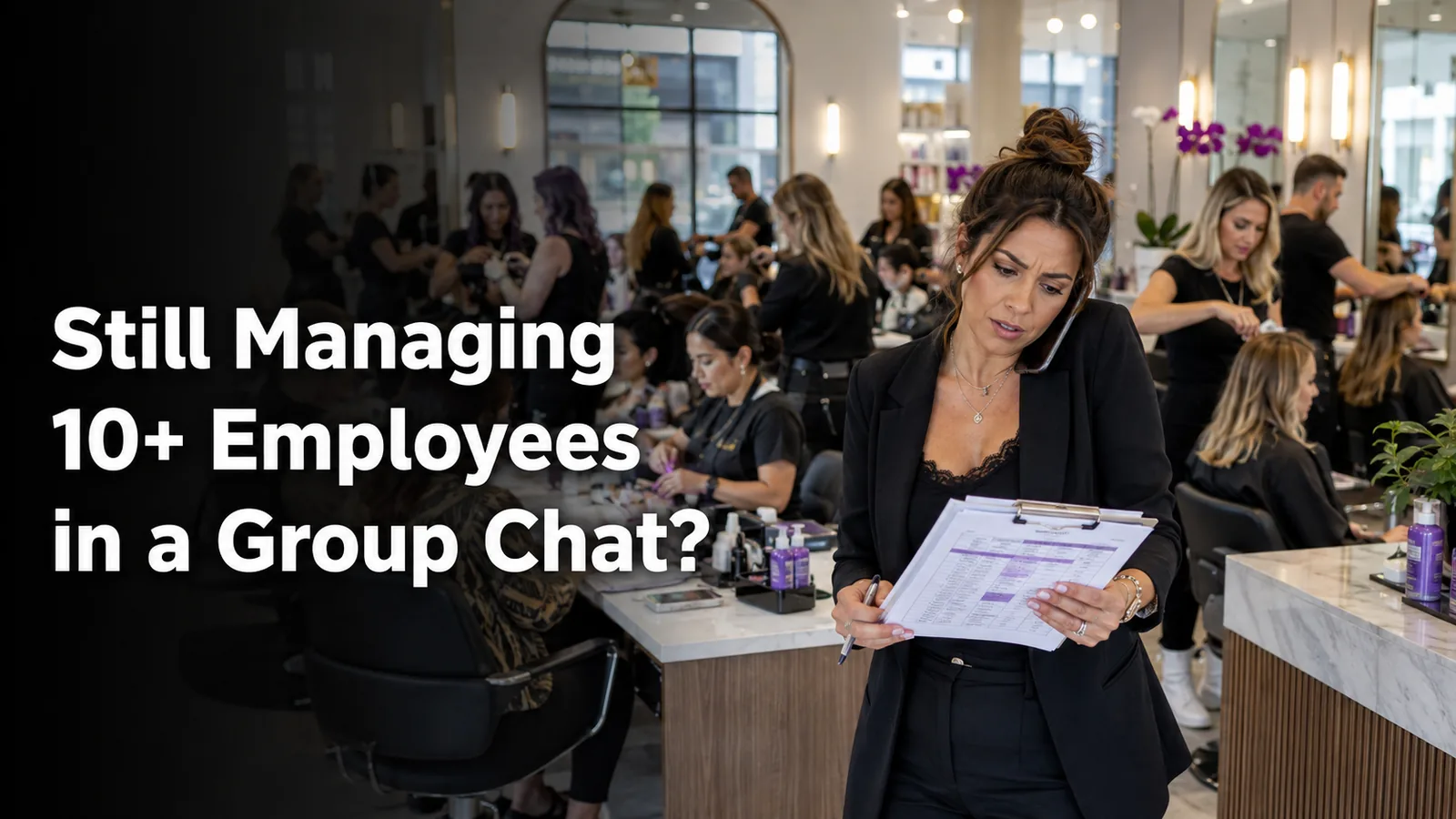
Most advice on a slow salon day is a discount, a story, or a text blast. Some of those fill a chair. They also teach regulars that full price is optional, and they never look at the schedule you already published. A Tuesday with three technicians and an open book is a different problem from a Tuesday with eight technicians sharing the clients of three. One needs people in the chairs. The other needs fewer people standing on a floor that cannot pay them.
Start with last month, not this morning
Before you post anything, pull the last four weeks by hour. Not by day. A slow Tuesday is often busy from 4 to 7 and empty from 10 to 1. Treat the whole day as dead and you will discount the hours that were already earning, and still leave the morning empty.
Count clients, or tickets, in each hour. Then count who was on the floor. The number that matters is clients per person, not the feeling that the room looked quiet. Four clients and eight technicians is a staffing problem. Four clients and three technicians, with an open book, is a fill problem. A lot of salons that ask for more marketing have the first one.
Build the week the way the salon staff scheduling tips describe it: staff the crush, and staff the dead zone with the smallest team that can still perform every service you sell. The extra bodies belong on Saturday afternoon. That is where the commission is.
Move the hours. Do not delete them.
Taking Tuesday off the schedule and putting those hours nowhere else is how you lose people. On commission, a thin Tuesday that someone was told to work is a pay cut they can see on the rota. The workable version is a rotation: the dead-zone shifts are shared, written down, and published two weeks out. Nobody should find out on Monday night that they are one of eight people covering a morning that needs three.
If you run more than one location, look across them before you look at a promotion. A slammed shop and a quiet shop on the same afternoon is a person who should have moved, not a 20 percent-off text.
A same-morning discount fills the wrong chair
A standing, small advantage for a known quiet hour can move flexible clients out of Saturday. Say it in advance, keep it to one service, and leave it alone. "Tuesdays at 11, a gloss is $10 less" is a price. "We are empty, 20% off anything today" is a lesson. The second one trains the book to wait, and the people who answer are the ones least likely to come back on a Saturday at full price.
If you make an offer at all, make it after the schedule is honest, and make it narrow:
- One service, one hour. Not the whole menu.
- A short list of clients who already asked to hear about openings. Not a blast to everyone.
- Talk about the opening, not about how quiet you are. "I have 2pm open for a gloss, first reply gets it" fills a chair. "We are slow, come in" does not.
Fill the hours that are actually empty
Three moves cover most of the real gaps. None of them need a new campaign.
Rebook the quiet window while the client is still in the chair on a busy day. Name the hour. The third week of the month, Tuesday at 11. A generic "want to rebook?" lands on Saturday again, because Saturday is what the client remembers. You are choosing the hour for them.
Keep a cancellation list of people who asked. When a slot opens, one text, one service, first reply. Fifteen to twenty names is enough. A message to the whole book is how you end up apologising to people who wanted a Saturday.
Use the short services the hole can hold — a fringe, a gloss, a polish, a brow. On a commission floor those only get done if they do not count as a full turn. Otherwise the rotation teaches everyone to skip them, and the gap you were trying to fill becomes the service nobody wants. How partial turns should work is in the rules a fair rotation has to handle.
On a walk-in floor, shorten the rotation
Walk-in salons feel a slow day as an argument about whose turn it is. The same small stream of clients is being shared by everyone who was told to come in, so the rotation looks unfair even when the count is right. The fix is a shorter list the whole floor can see, not a discount that creates ten more quick services for the same crowd.
That is a different job from the booking app. Walk-in salon software in the usual sense is a client waitlist. It orders the people waiting. It does not decide that Tuesday only needs four technicians on the board. Keep the booker. Run the floor on a turn system the team can see.
Do it on Thursday
A slow morning is a bad time to invent a plan. A workable week looks like this:
- On Thursday, look at next week's arrivals by hour
- Set the dead zone to the minimum floor, role by role, so every service you sell is still covered
- Publish that schedule before you write a single offer
- Only then decide whether a specific hour still needs the cancellation list
The promotion is the last step. Do it first and you will discount a day that was only overstaffed.
Where Fair Flow fits
Fair Flow is the floor layer next to whatever your clients already use to book. The schedule and time clock put planned hours next to the hours people actually worked, which is how a slow Tuesday stops being a feeling. The turn system is the shorter rotation the floor can see. Tickets show what those quiet hours produced, so commission is calculated from the work that happened rather than from a discount posted in a panic.
If the book is thin and the floor is full, book a demo and we will walk it against your own week.