
How to Manage Client Scheduling Across a Large Salon Team
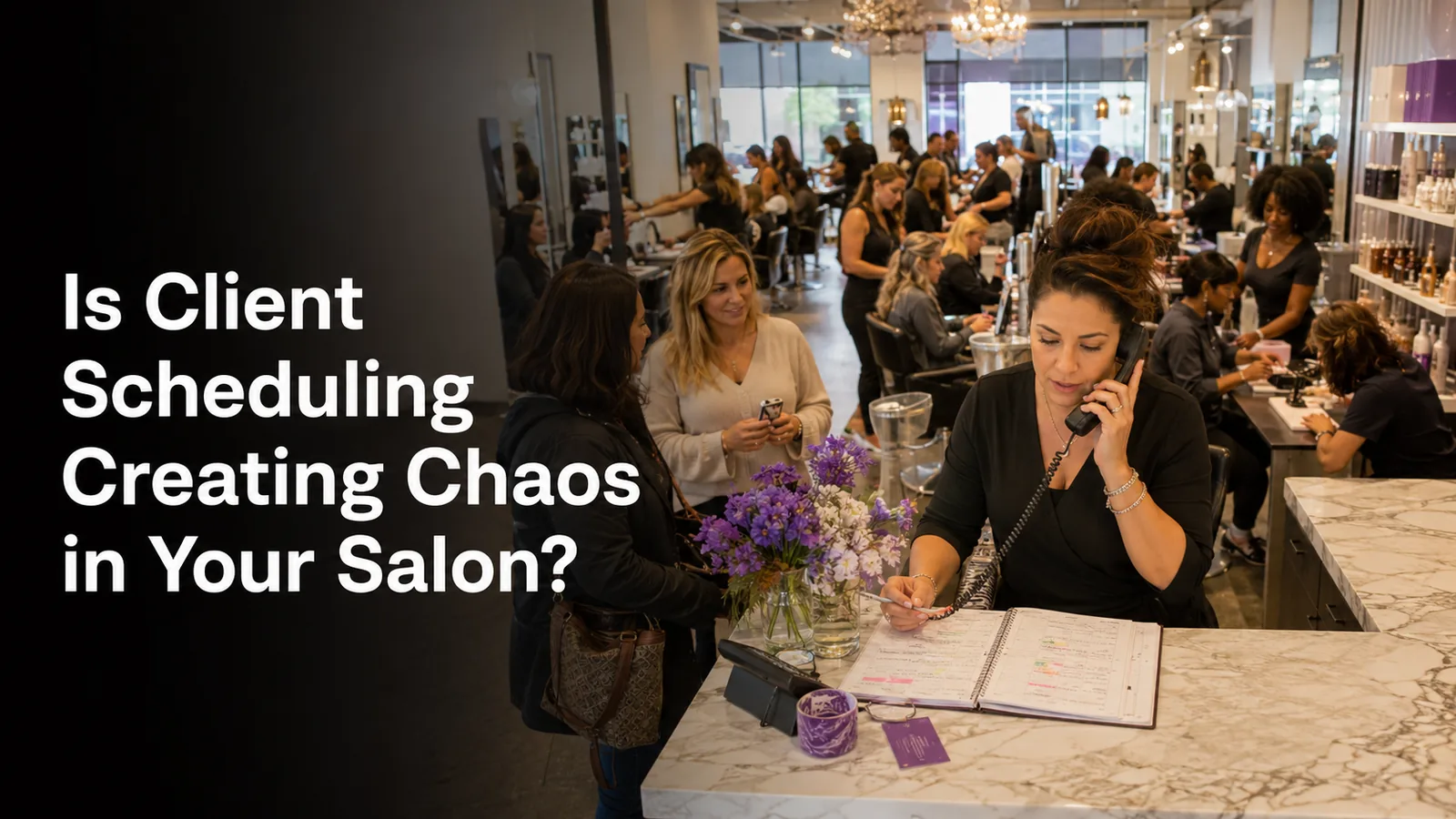
Running a salon or spa with 10 or more employees is a completely different operation from running a small studio. When you have two or three stylists, scheduling is simple. But when your team grows to 12, 15, or 20 professionals, the complexity of managing them fairly multiplies fast.
The most common complaints from salon owners with large teams are almost always the same: clients feel like they are getting passed around, some stylists are always overbooked while others sit idle, and no one has a clear picture of who is available when. These are not people problems. They are system problems.
This article covers client scheduling — who sees which client, and when. If the problem you are solving is shifts rather than appointments, read salon staff scheduling tips for teams of 10 or more.
Why Large Teams Need a Different Approach to Scheduling
A small team runs on relationships and memory. Everyone knows the regulars, stylists talk between appointments, and the owner can see the whole picture at a glance. But when a salon grows past 10 people, those informal systems start to break down.
Walk-in clients get assigned to whoever is nearby rather than whoever is next or most qualified. Long-term clients notice they keep getting different professionals. Some stylists are booked out for three weeks while others have gaps they cannot fill. The receptionist makes constant judgment calls with no reliable data, and you — the owner — get pulled into resolving conflicts instead of building the business.
The Hidden Costs of Scheduling Chaos
Poor scheduling does not just frustrate your team. It costs you money. When clients feel passed around or cannot get consistent appointments with their preferred stylist, they leave. Acquiring a new client costs five to seven times more than keeping an existing one, and salon owners with scheduling problems see higher client churn without ever connecting the two.
There is also a hidden cost to your top stylists. When your top performer is overbooked every week while newer team members sit idle, they burn out. Some leave. Others start looking at booth rental options where they control their own schedule. The scheduling problem becomes a retention problem, and you may not realize it until someone gives notice.
What a Better Scheduling System Looks Like
Salon owners who have solved this problem share a few things in common. First, they stop relying on a receptionist to hold all the scheduling logic in their head. Instead, they use a system that shows real-time availability across the entire team, with rules that account for each stylist's specialty, speed, and client history.
Second, they create clear policies for walk-ins and late cancellations that the system enforces automatically. No more judgment calls at the front desk. No more arguments about who gets the next client. The rules are visible to everyone, and the system applies them consistently.
Third, they give stylists visibility into their own schedule in advance. When team members can see what is coming, they plan better, show up prepared, and feel more respected. This alone reduces no-shows and last-minute scrambles.
Finally, they track which stylists have open capacity and which are consistently full. This data lets them make smart decisions about hiring, promotion, and client acquisition without guessing.
From Managing Chaos to Running a Business
The biggest shift salon and spa owners describe when they move to a structured scheduling system is not the technology. It is the mental shift. They stop being the one who decides everything in real time and start trusting a system that applies the same logic consistently, every day.
When scheduling becomes predictable, client retention improves. Your regulars know they can book their preferred stylist in advance. Walk-ins are handled by whoever has capacity, not whoever happens to be nearest the door. Your team feels the system is fair because it is transparent and consistent.
That is what moves you from managing chaos to running a business. You stop putting out daily fires and start looking at data, planning capacity, and making decisions that actually grow the salon.
If you are ready to bring structure to your team's schedule and stop managing every scheduling decision yourself, Fair Flow was built for salons and spas with 10 or more employees. Book a free demo today and see how it works for your team.